“Your Bones Held.”

Chapter Ten – Saturday, May 11, 2024
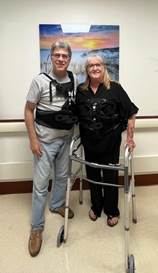
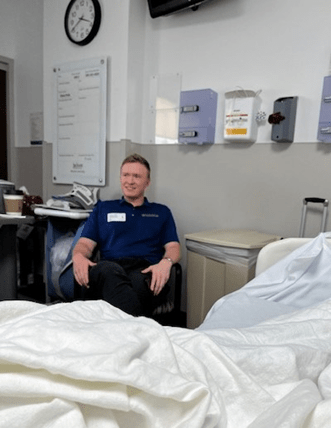
I do not know where this whole modesty thing came from. Generally speaking, I was not modest about my body before. I wasn’t overly showy about it either. I mean I was married three times and had two kids. My body had certainly been through some things. So, I didn’t think it was about being modest. I’m pretty sure this whole experience was more about not being in control.

I’ve always been independent. Fiercely so, and proud of it. Even as a little girl.

I was born in the 1960s, grew up in the 1970s and disco danced my way through the 1980s. I was too young to be a hippie, but I was right smack in the middle of the Women’s Movement of the 70s. “You’ve come a long way, baby,” was the Virginia Slims slogan. “I am woman; hear me roar,” were the lyrics the of 1972 Helen Reddy song. “A woman needs a man like a fish needs a bicycle,” Feminist activist Gloria Steinem was famous for saying.  My sister and I even joined more than 100,000 people to march on Washington, D.C. on July 9, 1978, in favor of ratifying the Equal Rights Amendment. The year before, on my 16th birthday, my parents gave me a necklace with a pendent that said, “I am me.” They always knew.

I knew too. I knew I would have a career. I knew I could do anything I wanted to as long as I worked hard enough at it. I didn’t need a man. I liked men, but I didn’t need one to accomplish my goals. I had me. That philosophy over time would prove not to always benefit me. That, and the choice to keep my maiden name, adding my husbands’ names to it. Having two last names turned out to be way more of a hassle than it was worth.

***

When morning came, I did exactly what I said I was going to do. I got up and showered even before the nurse made her morning rounds with my meds. I was clean, dressed and ready for whatever the day would bring.

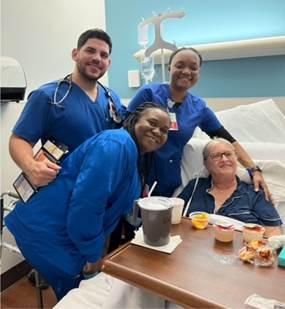
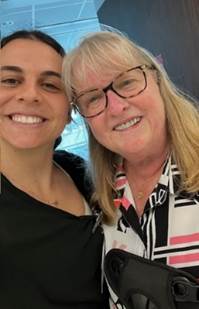
Around 7:30 a.m. a young women appeared at my door. Her name was Melissa. She was the physical therapist. Melissa asked if I needed help bathing and I said, “Nope. Already done.”  She was surprised. She asked if I could do what she did as she went through the motions of bathing oneself and I copied her. It felt stupid but she was just doing her job. And I had done mine.

Then, she moved onto the next thing. She walked with me to the fitness center on the third floor. It was huge. It had multiple floors. The walls were glass and overlooked downtown Miami. It was bright. All the equipment looked shiny and new. We sat down on a low padded table where she reviewed the rules again of healing after spinal surgery.

“No bending, lifting or twisting,” she said.

“BLT, yes I know,” I confirmed.

“Good,” she said. “If you drop anything, don’t bend down to pick it up. I will get it. At home, you can get a device called a gripper. Let me get one for you to practice.”

She went to get this device that looked like what people use to pick up garbage in the street. It had a long pole with a gripper on the end.

“You just pull the lever, and the gripper closes around whatever you need to pick up,” she said.

It seemed kind of silly to me, but I tried it anyway. Most of the things I tried to pick up slipped off the gripper’s end. It wasn’t very grippy.

I finally said, “I won’t be alone much at home, so I don’t really have to worry about not being able to reach things or pick things up. Leslie will be home when I need help, and my son will be home. I’ll have help.”

That was the first time I had imagined being home and I liked the feeling. Home meant normal. No pain.

That was not to be, but it was nice for a moment to think about.

***

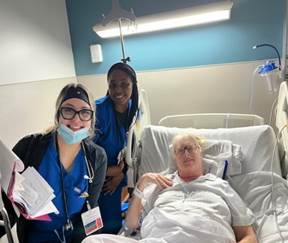
Melissa was a joy. She was the first person I met in the hospital that didn’t feel like I was meeting her in a hospital. She was young and joyful. Smart and ambitious. She was good at what she did and loved doing it. We had a good time. She probably would have enjoyed anyone who could engage in a conversation. Remember, I was on the brain injury floor. Not many patients were very lively or even chatty. She said I was a welcomed change.

Melissa had me do modified squats over the low, padded table, to strengthen my quads. She said that they would be doing a lot of the work while my back healed in the brace. Then we tackled the stairs. She knew that we had 17 stairs in our house. There were stairs in the gym that connected the first floor of the gym to the second floor. There were easily twice the number that were in my house. She put a chair on the landing halfway up the staircase in case I needed to rest. Then we started up. When we got halfway, I didn’t need or want to rest. Moving felt great. Fully breathing made me feel alive and hopeful for the first time in a while.

The light and airiness of the gym was sustenance for my soul. I didn’t want to leave, but after 90 minutes, I really did need a rest. My back hurt and I was tired. She walked me back to my room. I thanked her and we hugged. I asked when I was going to see her next. She said Monday. She was off on Sunday. I reluctantly said goodbye and laid back in bed, putting a full sleeve of ice on my back. Therapy was only half over. I still had 90 minutes of occupational therapy in the afternoon.

***

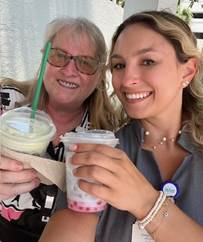
After lunch around 1 p.m., Another young woman knocked on my door. She introduced herself as Brittany the OT. She was blonde with a kind face and sweet smile. She assessed my ability to stand and walk. Then she told me even though I was capable of walking on my own, she had to take the wheelchair that was tucked under the credenza with us just in case. I forgot what floor she pushed but it was definitely the occupational therapy floor. It had a whole car on it, a full kitchen and laundry room. Today’s OT was to navigate the kitchen. My task was to make cafecito. Cafecito is rich, delicious and sweet Cuban coffee. In Miami, it’s usually served around 3 p.m. in professional offices as a pick-me-up.

She had me measure the correct amount of coffee, add water, screw the silver moka pot together. Put it on the stove. Turn on the stove and wait to capture the first part of the coffee that brewed. I mixed that with sugar to make a frothy syrup. Then added the rest of the coffee and poured it into little thimble-sized cups. We each drank a shot.

We chatted while we made the cafecito. We talked about how I could cook and do the laundry at home. I explained that our washer and dryer were front loaders so I wouldn’t be able to do the laundry for a while. We also talked about reorganizing the kitchen to suit my limitations like moving the pots and pans from a low drawer to leaving them on the counter so I could get to them. Putting the cats’ food and water on the counter so I didn’t have to bend down.  Most of the adjustments I was going to have to make were common sense things that just had to be thought through. At the end of our session, she walked me and the wheelchair back to the room and said she’d see me again on Monday afternoon.

            I was tired but exhilarated. I had a productive day. I felt pretty good. My back hurt, so I iced it again. But my spirits soared. I was on my way back. I was going to put this misery behind me and not look back.

Or so I thought.
“Your Bones Held.”

Chapter Eight – Tuesday, May 7 – Thursday, May 9, 2024

Over the next three days, we learned that the next steps toward my recovery was to transfer me to the Christine E. Lynn Rehabilitation Center for The Miami Project to Cure Paralysis at UHealth/Jackson Memorial next door. The two facilities, although separate, were connected by a hallway tunnel on the first floor. 

In order to transition to Lynn, I was not allowed to be on any heavy pain meds and no meds via IV. I had to start being weaned off. I was allowed to have oral pain killers, Tylenol, nerve and muscle relaxers plus the nighttime Melatonin and Xanax. But I had to function like an outpatient in order to be transferred to Lynn Rehab.

I was not sure how it was going to go, but I was thrilled to be getting out of the hospital even though I was just moving into a different place. It was all about taking the next step in the healing process.

I researched Lynn. It had a fascinating story. It was also inspiring. It epitomized the lesson for anyone in recovery or life, never, never ever give up. 

Nearly 40 years in the making, Lynn stood tall as an eight-story building with beautiful views of downtown Miami. It was designed to be one of the country’s elite facilities for patients recovering from traumatic brain injury, spinal cord injury, cancer treatment, and other complex conditions.

As a near-native Floridian, I knew the backstory well. In 1985, Marc Buoniconti, son of legendary All-Pro and Hall of Famer linebacker and former Miami Dolphins Nick Buoniconti, sustained a spinal cord injury while playing football for The Citadel in South Carolina. It left him paralyzed from the shoulders down at 19 years old.

Born out of that tragedy was the Miami Project to Cure Paralysis. World-renowned neurosurgeon Barth A. Green, M.D. with the University of Miami Miller School of Medicine joined the Buoniconti’s in their quest for new treatments for traumatic spinal cord and brain injury and neurodegenerative disorders, including Parkinson’s disease, Multiple Sclerosis, ALS, and Alzheimer’s disease. 

In case you were wondering, yes, that was the same Dr. Green who called me out for my obnoxious behavior on Facetime. He was also the one who greenlighted our medivacked trip from Cozumel to the Ryder Trauma Center and Jackson Memorial Hospital for the lifesaving neurosurgery. Dr. Urakov was his protégé from UM’s Miller School of Medicine. How embarrassed was now that I realized who he was?

Almost 40 years later, on March 20, 2022, Lynn Rehab Center opened.[1] And two years after that on March 10, 2024, I was admitted.

I am not an especially religious person. But someone somewhere was looking out for me. Truly, “there by the grace of God go I.” For the rest of my life, I will look back on these events with wonderment and gratitude.

The night we learned about our upcoming transfer to Lynn, Dr. Green came to my room in person. He sat in the chair opposite us; Leslie in one bed and me in the other. He told us about Lynn and how intensive their therapy program was.

“Three hours every day,” he said with enormous pride.  

I was told earlier by the PT ladies that I had reached the maximum of what they could do for me on this side of the hospital. That’s why I was being transferred. Dr. Green and Dr. Urakov both insisted on this intense therapy for me and fought with my insurance company to get it.  

I have often thought about this man and his life’s work. I remain humbled and in awe.

While he sat with us, I had the chance to ask him why me? What was the story behind how he came to find me? Why did he do what he did? He didn’t know me. Yet, it was his decision and his alone that saved my life.

He simply said, “I don’t know how to say no.”

Chapter Nine

Friday, May 10, 2024 at 10 p.m.

The order finally came.

After 10 days on the spinal floor of Jackson Memorial Hospital, I was moving to Lynn Rehab Center. A bed had finally become available. I was not allowed to walk there. Instead, an orderly arrived to take me by gurney. He packed up our suitcases, my walker and whatever miscellaneous stuff we had accumulated over the past 10 days and at 10 p.m. took us down the elevator to the first floor and wheeled me through the connecting hall into the Lynn. It was beautiful. White walls, modern furniture, very state-of-the-art.

            The first floor had an aquatics center.

I was really hoping to be able to use it. I’m a pisces. I love the water. But with the new wound, I was unable to be submerged in water.  

Regardless, Leslie and I had been looking forward to this day since we first learned that the plan was for me to have intensive physical and occupational therapy there. It was cause for a celebration. There was a restaurant in Miami that I used to go to all the time when I worked in Public Relations and had many law firm clients in Miami. It was called Perricone’s. It actually had a large tree growing through it. I wasn’t sure exactly how close it was to the Jackson Hospital complex, but thanks to whatever delivery service they used, we were able to order a wonderful meal as we embarked on the next leg of this journey.

            My room was on the eighth floor. It was the brain injury floor. There were no rooms available on the spinal neurosurgery floor.

The room had one bed in the center, a big bathroom with a handicapped shower, a large credenza and cabinets. The bed for Leslie was pretty crappy. It was a flat couch with hard cushions. I knew that it wasn’t going to work for him, but we’d have wait to see what we could do for him in the morning.

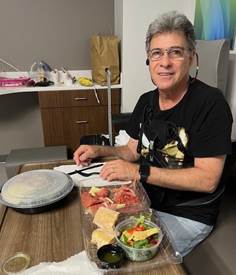
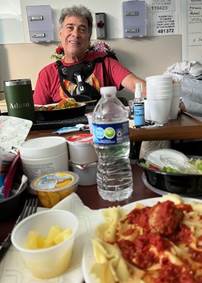
We settled in and had our dinner. We had a charcuterie board of delicious meats and cheeses. I had lobster ravioli, a perennial favorite, and Leslie had chicken marsala. It was a total joy not to be eating hospital food. The only thing missing was the wine, but given the drugs I was still on, that wouldn’t have been a very safe option. I did try, however.

            While we were eating, the night nurse visited us. She informed us that tomorrow I was to learn how to bathe.

“I know how to bathe,” I said. “I’ve been bathing myself for 60 years, including the last five days.”

She seemed unfazed. “They’re going to teach you.”

I paused for a moment, remembering that when I needed help bathing, Leslie helped me. I wouldn’t let a stranger help me bathe then and I wasn’t about to let one help me now. I was perfectly capable of grooming myself. I don’t care if these people see hundreds of naked bodies all year long. Mine was not going to be one of them. 

So, true to form, I said, “Over my dead body they will.” Then thought, here we go again. More stupid rules for the lowest common denominator to follow.

But I wised up.  

“What time does PT usually start,” I asked.

“Around 7 a.m.,” she said.

“Thanks,” I answered.

I would be up at 5 a.m. to shower.


[1] https://news.med.miami.edu/a-dream-finally-realized/

“Your Bones Held.”

Chapter Six – Sunday, May 5, 2024

It was Cinco de Mayo. A day I usually celebrate with tacos and Margaritas but not this time. Today, the big deal was that I got the first look at my back. The nurse changed the bandages, and Leslie took a photo with my phone. The incision was about 12 inches long. It started at the top of my back about the same height as my shoulders and went down to the middle of my back, centered between my shoulder blades. I had had my share of skinned knees and minor procedures to remove benign skin cancers and blemishes, but this was serious shit.

Everyone who saw it said it “looked beautiful. Very clean.”

To me it looked angry and horrible. The neurosurgeon said the scar would be minimal. I couldn’t imagine that. It was so long. He said the angry red/purple color was the glue they used on the top layer. The stitches were underneath the skin. There were two layers of internal stitches. One that stitched together the muscle and the other that stitched together the lower layers of skin. The glue was the last layer of protection that kept everything intact. The stitches would dissolve, and the glue would eventually wash off when I started showering without the bandage.

An added bonus was that I also had a tube stuck into my left shoulder that connected to a suction cup that drained the blood from the surgery site. It was Frankenstein-creepy the way a tube was stitched into my back. The drain container had to come with me wherever I went. The nurses drained the blood and measured it every day. The more mobile I became, the more I hated that thing. Eventually we named it Urakov, after my neurosurgeon. It was a reminder that despite the inconvenience of having it, it was instrumental in saving my life.

Dr. Urakov would visit every day at different times. I later found out that he did his rounds in between surgeries and teaching. He chatted with me and then looked at the drain. He didn’t even hold it in his hands. He knew what he was looking for from afar. I was always happy to see him even when I wasn’t happy. I saw him as a symbol of hope. Yet as nice as he was and as pleasant as he was to talk to, he was all business. He wouldn’t budge on the pain meds or the time the drain stayed attached to me. Each day, I greeted him hopefully. I held up the drain, asking if it could be detached, and every day he stood at the foot of my bed, arms folded and said, “One more day. It’s not the right color.”

Still, as days in the hospital went, this was a decent day. I was stuck with Urakov (the drain) at least one more day, but I had the catheter out. I had the back brace and the walker. I was able to move around more and getting better at it. The next order of business was to get a shower and wash my hair. I also had to ditch that hospital gown! It made me feel worse than I was. Well, emotionally, anyway.    

Throughout my stay, I refused sponge baths. They were too much of an invasion of my privacy. If anyone was going to wipe me down, it would have been Leslie, and I would rather have died than leave him with that memory. I was resigned to be dirty and waited to shower on my own. 

Now that I was pseudo-mobile, I decided it was time. I didn’t ask for permission. I refused to be denied. I just asked Leslie to help me get set up. I wore the brace over the gown and used the walker to get to the bathroom. The bathroom was handicapped accessible so there were handrails everywhere. There also was a portable medical shower chair already in the shower.

Leslie had consulted with the nurse to learn how to tape up my back with plastic so the dressing wouldn’t get wet. It was like a 12” x 12” see-through, waterproof plastic sheet that adhered at every side. It felt weird every time I had to get taped up, but nothing was going to spoil my mood. I was taking my first shower in five days!

Leslie had raised two boys, so he hadn’t had any practice washing a woman’s hair. But now was his chance to learn. I will add that by the time I no longer needed his help to shower, he had gotten really good at washing my hair. He could have opened his own salon.

Here’s what my first shower was like. I had the vest on and made my way with the walker into the bathroom. The bathroom was a decent size, but with the rails that guarded the toilet and navigating with the walker, it was a tight squeeze for two people. Every move had to be choreographed. We started in the shower. The shower head was attached to the back wall. We placed the seat toward the front of the shower. The plan was for Leslie to be behind me with the shower head and direct him with it while I cleaned myself. We lined the seat with the pre-soaked Hibiclens wipes so I wouldn’t have to sit directly on the seat. It was like putting toilet paper down before sitting in a public restroom. Gross! We placed the shampoo and conditioner on the rail next to the seat so I could reach it. Now we were ready to begin.

We fit the walker around the sink. We lined the floor with towels so I wouldn’t slip. Slipping was the major fear for both of us. Leslie helped me take off the back brace and balanced it on top of the sink. I took off the gown and happily tossed it underhand onto the floor under the sink. I slowly made my way around the seat to the front of the shower and carefully sat down. Leslie was behind me for support. He took the showerhead off the wall, held it down and turned on the water. He checked the temperature then handed it to me. The warm water was glorious! I soaped up and rinsed. I wet my hair and handed him the shampoo. He washed it and I rinsed.

Leslie had to take care of my hair because I couldn’t reach my arms up very well. It pulled the incision on my back and hurt. The muscles on my back were also very sore. Plus, I had Urakov, the drain, that I had to hold in one hand. The tube wasn’t long enough to lay on the floor and when it slipped it would pull on the stitches, so I only had one hand to wash with. The whole process was very slow and methodical. After I rinsed my hair, I handed Leslie the conditioner. As he massaged it in, I started to feel human again. My first shower took a long time. We took every movement very slowly. We both were deathly afraid of me twisting or bending in any way so every movement was well thought out, discussed and intentional.  

            Finally, I was clean! My hair was washed. It felt great. And the best part? I put on my own clothes. Fuck that dreadful, ugly, ill-fitting gown with the back ass-side opened. I was almost a whole person again.

            We reversed the process of getting into the bathroom to get out. First, I put on clothes, then we fastened the brace and then I stepped into the center of the walker. Leslie picked up the towels on the floor and I steered myself out.

However, I still had to dry my hair. First, we had to find a place to put Urakov, the drain, so at least I could attempt to use both hands. We discovered that it fit tucked into front of the brace. It was secure there. But I still had trouble raising my arms to reach my head to comb my hair and then blow dry it. The first time was clumsy, painful and I didn’t dry it completely. But still, I was clean! That was the main thing. And whatever hardship I had to overcome to be clean I would do it repeatedly every day. Feeling human was an attitude changer.  

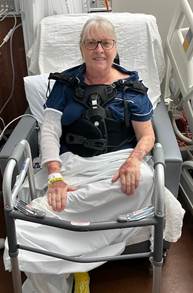
Now that I was clean and pseudo-mobile, I started sitting in the chair more with the brace of course, my constant companion. At least it was much smaller than the other. It closed at the waist and had front and back support where I needed it. The point of it was to prevent me from the three no-nos of post-spine surgery. No bending, lifting or twisting, also known by the BLT acronym to remember.

“Your Bones Held.”

Chapter Five – Friday and Saturday, May 3 & 4, 2024

The second and third days post-op, I only remembered bits and pieces. When I finally slept off the anesthesia, I was in a lot of pain from my mouth and even more from my back. I needed drugs. Better drugs. I wanted to be knocked out, but they wouldn’t give me enough for that. I was mean and nasty to everyone. I hurt so badly; I wanted everyone else to hurt too. I was hungry, but my cheek was so beaten up, I couldn’t eat. Leslie still fed me pieces of graham crackers that I could swallow with water. I also couldn’t quench my thirst. I was so confused as to why I was so thirsty because I had an IV drip that was supposed to be giving me fluids.

I wanted to die. I wanted to be anywhere but there lying in that pain. My back hurt so badly all I wanted to do was stop lying on it, but I couldn’t move. All anyone could do was roll me like a log toward one side or the other, but that relief was fleeting. No one wanted to move me too much.

The day after the surgery, some woman came in holding a walker and woke me. It was light out, but I had no idea if it was morning or afternoon. She introduced herself and said something about being a physical therapist. She had padded the lounge chair on the other side of my bed. She wanted me to get out of bed and use the walker to walk over to sit in the chair.

I thought she was crazy. But I knew medical professionals want you to get moving as soon as possible after surgery. I felt very weak. I needed help sitting up. I was unsteady as I swung my legs over the side of the bed. The PT person caged me in with the walker. I put one hand on each side. My arms were like jelly holding on to the walker. Then I remembered I was in that horrible gown. The back was wide open.

“Leslie,” I asked. “Please get behind me and make sure the back of this gown is closed.”

I stood up and he tugged the sides to close the back of the gown. Looking down, I saw those horrible yellow socks with the grippers on my feet. Someone must have put them on me.

I was making quite the fashion statement, standing there inside the walker. I felt like I was 90 years old. I probably looked like it too. There’s a reason there aren’t any mirrors in the room. Like a shiva house after someone passes away. The mirrors are covered so you can’t see how bad you look while you grieve or in this case as you suffer.

 Then, I realized my hair was dirty, hanging in my face. I hadn’t washed it since the accident. Since Mexico. I had to stop for a second to calculate the time that had passed. It was four days ago. My hair was greasy, stringy and felt awful. I made a mental note to do something about that as soon as possible. But first I had to be able to walk.

With Leslie behind me making sure I didn’t moon anyone and the therapist at my side, I very slowly made it to the chair and gingerly sat down. It actually felt good to be upright. It felt good not to be putting all that pressure on my back. I was still really groggy and foggy. My mind was mush. I was very slow to put things together. I remember people coming in to see me, remarking how great it was to see me sitting in the chair. I guess I smiled or acknowledged them in some way, but I don’t remember it. I think one of them was Kalen, too. I do remember thinking that as shitty as I felt and looked, it must have been reassuring for him to see me making progress.

I also knew he was going home soon. Back to his normal life and I was happy about that. I felt like having put my spine back together, life could go on. But, based on the pain I felt, I knew it was going to be a very long time till I got to healed.   

And I made sure everyone knew it too.

Normally I’m a nice person. I take great pride in being memorable in a good way. Mostly I like to be funny. Make people laugh. But this wasn’t like most situations. This was war. It was me and my pain against the world. My goal was to get as much dope as I could to forget where I was and stop hurting. But they were very stingy with it.

I fought with everyone. I didn’t want to wait a nanosecond longer than I had to for the pain meds I was due. The second it was time, I asked for them. If the nurse was a second late, I was on that room buzzer demanding service or yelling into the corridor. I was horrible. Relentless. Cursing. Yelling. Bitching. I kept saying that the left hand didn’t know what the right hand was doing. They gave me a pump to medicate myself every 10 mins. It wasn’t enough. I still felt pain. That’s when I got really nasty.

Then a man came into my room, carrying a big yellow and blue looking thing in a big plastic bag. He said it was my back brace. He unwrapped it, approached me and started fitting me for it. It was big. It went from my neck to my thighs. As he was measuring me, he was telling me that once it was on, I had to wear it 24/7. He said I could not take it off. Not even to shower.

Didn’t he know that was the totally wrong word to use at that particular moment? I had spent the earlier part of the day planning how soon I could bathe and there he was telling me that whenever I could bathe, I had to be further encumbered with that brace!

That was it. I broke.

I started to scream. “Nooooooo. This is not my life. I will not wear that thing. Get it away from me.”

I sobbed. Heavy body shuddering sobs.

I sunk so deeply into myself I feared I’d never make it back to the surface again.

I wanted to die.

I remember thinking of a scene in the movie The Horse Whisperer with a young Scarlet Johanssen and Robert Redford. In a freak accident, Scarlet got crushed by her horse and had her leg amputated. She was mad, angry and afraid just like I was. Redford told her about a native American boy who lost his legs and was confirmed to a wheelchair. He said he checked in on him from time to time, but he was no longer there. He said it was like he had gone somewhere else. Scarlet started to cry and said “I know where he goes.” As I was getting fastened into that yellow and blue brace that was to become an interfering part of my body for the unknown future, I knew where that wheelchair-bound kid went too. I was there.  

Tears were steadily streaming down my face. I was wailing, asking anyone in earshot to just let me die. When he didn’t stop fitting me, I shot Leslie a look that in no uncertain terms showed exactly how I felt. I loathed him. I blamed him for doing this to me. It was not the first time I had looked at him like that in the past few days.

He finally looked at me, through my tears, and said “you have to stop giving me the death stare. I feel horrible enough.”

It took me a while to find empathy for him and that certainly wasn’t the time.

Just then Dr. Urakov walked in. He was probably doing rounds when he heard the wailing down the hall. Everyone had to have heard it. People probably thought they were tearing me apart limb by limb instead of locking me into a permanent brace like the Count of Monte Cristo.

“Stop!” he said. “That’s not the brace I ordered for her.”

“What?” I thought jolting myself back from the brink of darkness.

“Take that off,” he ordered. And suddenly I was free again.

“Thank God,” I said out loud, tears streaming down my cheeks. My eyes and face were red from crying.

 I looked at Dr. Urakov. In that instant, he saw the deep despair I was feeling. He smiled. “That’s not the brace for you. The one I ordered; you only wear when you are out of bed. You can take it off and shower anytime you are ready.”

I felt such relief. Such gratitude. I was still in pain and dopey, but the deep despair had lessened.

“I can bathe?” I repeated.

“Yes,” he said. “Whenever you are ready.”

“I’m ready,” I said. And began to daydream about my first shower in days.

While I was in my reverie, the doctor explained to the brace guy which make and model back brace he had ordered. The man left and came back a little while later with the correct one. The one I wore religiously for 10 weeks after leaving the hospital. I did not have to wear it in bed. Only when I was out of bed. It was a huge pain in the ass to put on every time I got out of bed, including every time I had to pee. Especially in the middle of night. But true to his word Leslie helped. He got up every time I needed to use the bathroom and strapped me into that brace. Slowly, I started to find a way to forgive him for what he had done to me. I stopped giving him the death stare. At one point later on, I found the empathy I needed to forgive him completely.

While the neurosurgeon was still there, Leslie spoke to him about his problem. His L1 compression fracture needed attention. He was still in a lot of pain. The doctor arranged for Leslie to be seen in the ER that afternoon. He got an X-ray that confirmed the Mexico diagnosis, and he was issued a back brace too. The same one I had to wear.

As my strength improved, I was able to walk for longer periods of time still using the walker. I would walk with the physical therapist in the morning and then walk with Leslie in the afternoon. I was able to walk from one end of the hall to the other, which took us past the nurses’ station. They would remark how cute we were in our matching back braces. Word got around and people would stop by our room to comment on my recovery and check in on Leslie. We became the talk of the floor. 

***

Nights were generally bad. There was nothing to do but lay in bed directly on my pain and count the hours till I could have more pain meds. Yes, I had the pain med pump that would allow me to click it every 10 minutes, but it wasn’t enough. Remember how I said I equated this to war? It was! Me and my pain against anyone who stood in the way of my getting relief. And that was exactly when I got really nasty. I was so nasty; the nurses couldn’t wait to get out of my room.

Just then, Leslie’s phone rang. It surprised both of us. It was a Facetime call from the director who had met me upon arrival. Dr. Green was the man who had the Trauma Center on call, awaiting my arrival. The same man who arranged for my emergency neurosurgery and the amazing neurosurgeon. But that’s not all he was. He was the Chairman of the Department of Neurological Surgery at Miami Miller School of Medicine at Jackson Memorial. He was the head guy.

He told Leslie that he had gotten three calls that evening from my nurses. They complained that I was obnoxious and mean. He told him he thought it was the narcotic drugs I was on that were making me that way and he wanted to stop some. I didn’t want that. I wanted more drugs. It turned out that the call was just a formality. He had already discontinued the narcotic that he thought was making me aggressive.

The doctor asked to speak with me. Leslie handed me the phone. The head of this prestigious department had called us on Facetime to tell me to stop verbally abusing his staff. He told me there was no reason not to be civil. He said he had changed my pain meds and wasn’t expecting to get any more calls. He wished me a good night and hung up. I was not happy. I was embarrassed. But I was still in a lot of pain and now I was fucked. What could I do? I felt defeated and quietly cried.

“Your Bones Held.”

Chapter Four – Thursday, May 2, 2024

At 8 a.m., I awoke to find that my older son Kalen had arrived from Tallahassee. He took a 6 a.m. flight to Miami and then got an Uber from the airport to the hospital. Kalen and Leslie apparently had coordinated this. I knew Kalen was coming but I didn’t remember when. Leslie knew. They had already made the plans. Leslie was going to give Kalen his car so he could stay at our house for the few days while Leslie stayed with me.   

Kalen and Corey are nine years and five days apart. I already noted that Corey was in college. Kalen was a lawyer in Tallahassee. The hardest calls I had to make when I found out just how hurt I really was to them. Both handled the call well I thought. Though I later found out that Corey was terrified of losing me. The idea still haunts him to this day. He and I are very close. He is studying to be a writer, so we have a lot in common.

Kalen on the other hand was born to be a lawyer. I knew when he was four years old that was his career path. He had unusually well-developed negotiating skills even at that age. He knew how to deliver a cogent argument when he thought he was wronged. Some 30 years later, he loves what he does and that makes me very happy.

Kalen is now very happy about my relationship with Leslie. He thinks Leslie is very good for me. He is notorious for reminding me to “Be nice to Leslie.” Or “Don’t be yourself. Think about Leslie.” Kalen thinks Leslie is the “normal” one, which by default makes me the crazy one. Over the years, that has changed somewhat. He has softened his critique of me a bit. While I loved seeing him from my hospital bed, I also hated myself for being in the situation that made him come for this little visit in the first place. Under his professional analytical exterior, I knew he was worried sick, and that it was my fault.

***

One of the strange things about being in the hospital is the total lack of privacy. Aside from the nurses, administrators and doctors who just walk in, we had an unexpected visit from the hospital rabbi. He must get notified when a Jew is going in for surgery or something because he just appeared. We did not request a visit, though I could be wrong about that. I do remember something about a clergy visit and thought even if it would be a priest, it probably couldn’t hurt.

The rabbi was a not a tall man. He was wearing a beige corduroy sport jacket and kippah. (The small head covering that most male Jews wear mainly in synagogue to cover their head in deference to God.) My first thought upon him entering my room was that the jacket he was wearing seemed out of season. It was hot in Miami in May. Why was he wearing a jacket? But that thought quickly vanished. He introduced himself. He told me he came to offer a prayer for a successful surgery and speedy recovery. Then he saw Kalen sitting in the chair. Kalen stood to shake his hand, towering over him. The rabbi suddenly looked thrilled. He started taking something out of a small case. As he did that, he explained that during weekday morning prayers, observant Jewish men wear tefillin. They are small black leather boxes with scrolls of parchment inscribed with verses from the Torah.

Realizing what was happening, Kalen laughed and said, “Mom, only under this specific circumstance will I do this for you.”

Kalen stood still while the rabbi wrapped his arm in a black leather strap and placed the tefillin box on his forehead. Clearly uncomfortable, thinking most of religious or spiritual practices are “voodoo,” Kalen and the rabbi recited the prayer for me at the foot of my hospital bed. It was probably the kindest, most selfless gesture Kalen had ever made for me. I was not allowed to take a photo. He would never want any to see what he’d done. But at that moment, I understood just how deep his love for me was. It was one of the most memorable moments of my unfortunate stay and one of the silver linings I had mentioned earlier.

After the tefillin, the neurosurgeon Dr. Urakov came by. I introduced him to Kalen. He reiterated what to expect for the surgery. He said that they would take me down around 3 p.m. It would take about four hours. The first two hours, he said, he would reconstruct my T4 vertebrae and attach it to my spine with screws and rods. After that he would clean out the shrapnel that lodged in my spinal column.

“Anytime I have to work near the spinal cord, time stops,” he said. “That part takes as long as it takes.”

  The very words “operating near the spinal cord” sent a chill down my spine. Once again, I couldn’t believe all this was happening to me. Kalen and I exchanged a very serious look. Trying to lighten the mood as Dr. Urakov started to leave I pointed to Kalen jokingly and said, “He’s a lawyer. Be careful.” He laughed, shrugging it off and said, “I’m not worried.” I felt like a schmuck.

***

I didn’t know what time it was. I didn’t know the time most of the time I was there. All I knew was how long it was until I was due for my drugs, especially the morphine.

I wasn’t happy that my surgery was scheduled so late. Under normal circumstances, I’d be pissed that I wasn’t the first surgery of the day. I hate waiting…for anything. I firmly believe I was born without a patience gene. I don’t like waiting for anything, especially for unpleasant things like medical procedures because I conjure up worst-case scenarios in my head. In Yiddish it’s called “dreying.” It means mulling something over and over in one’s mind until it makes you more worried than you should be. For me it makes me anxious. And then I get nasty.

Except this time, there wasn’t enough time for me to drey. Things happened so fast. I didn’t even realize I wasn’t allowed to eat or drink anything before the surgery. And I really had no idea what was going to be done to me. All I knew was that it was really serious. Life threatening. I did not have the luxury of putting it off. I was also on a lot of drugs. As I look back, I think the best way to describe my mood was resigned. I wasn’t flipping out. I wasn’t really even scared. I knew I had no choice. Without the drugs I was in unbearable pain and in that IV was Xanax, my second-best friend next to morphine.

***

Leslie had stayed with me overnight at the hospital. He slept in a reclining chair. It was very uncomfortable. Remember, Leslie was injured in the boating accident too, only he didn’t have a chance to get any help for himself. He was too busy getting us home and then dealing with me. Leslie wasn’t with us in the room when the doctor visited. I don’t remember where he went, but Kalen was with me and there was plenty of time before they came to get me for the surgery.

Or so I thought.

Leslie returned to the room around 11:30 a.m. At noon, the assisting neurosurgeon Dr. Tyler Cardenal came to get me. He said the surgery before mine had ended earlier than anticipated and they could take me now. Strangely, I didn’t feel freaked out. I was told to give Kalen my jewelry. Leslie followed me to the Pre-op. I don’t really remember him there, so much was going on. But if I think hard, I am able to recall images and flashes of him and things that he said.

Let me stop for a minute to say that I abhor all of this. I hate being a patient. I hate hospitals. I hate being poked, prodded, or anyone telling me what to do. I hate being naked under an ugly hospital gown. I hate the catheter and the IV. I despise large institutions and bureaucracies. I am convinced that the rules large institutions use were designed to cater to the lowest common denominator. Those rules exist for people who do not think for themselves or do their research. I do, so therefore those rules do not apply to me. I need specifics. Facts that apply to my specific situation. I question generalities. I must know why a rule or regulation is needed before I consider complying.

For example, when procedures require fasting, institutions state rules that there is no food or water after midnight before your procedure. That does not take into account the time of one’s procedure. Someone with a 7 a.m. procedure would have fasted for 7 hours and someone with a 3 p.m. procedure would have to fast for 15 hours. That makes no sense to me. That’s why I have to know exactly how many hours I need to fast based upon the time of my procedure.

Even in my extreme, no-choice situation, I felt no different. My bullshit antenna was up and on high alert. Fortunately, I was coming to this surgery from a hospital room. I was a patient admitted to the hospital the night before from the Trauma Center. I was doped and drugged throughout the entire pre-op stage, so everything had already been done. I guess they didn’t feed me that morning, but I really don’t remember.

The formality now was to meet the operating team and the anesthesiologist. I remember meeting him and Leslie said that he had done business with the guy; that he wasn’t very nice. Not a great foreboding for what was to come. But I didn’t think too much about it at the time. I had passed the point of no return. He said I had to be intubated. I sort of knew what that meant. I really didn’t want to know too much more. And thank God, I was really drugged. I had the IV. I had anti-anxiety meds. I had pain meds, and I was about to get even more. Plus, after the surgery, I was going to be out of pain. Or…so I was led to believe. My recovery was 100% guaranteed. Anything I could do before the accident; I was going to be able to do after the surgery. That was really good news, but what they didn’t tell me was that there was a lot of time between those two things and much, much more pain to get me through to that alleged 100% recovery.

I don’t remember saying good-bye to Leslie, but I knew I wanted him to be the first person I saw when I woke up.

***

“Leslie?” I managed to croak out loud the second I was alert enough to realize where I was. The surgery was over. I was in the recovery room. And I was alone. I was seriously doped up, but I knew enough that I did not want to be where I was. At that very instant, I panicked. My fight or flight response kicked in and I wanted out.   

“Leslie,” I said louder this time with more urgency.

No one answered.

“LESLIE! I screamed. “Where are you?”

I don’t remember who came in, but it wasn’t Leslie.

“Where the fuck is Leslie?” I demanded to know.

No one could tell me anything.

The longer it took for me to get answers, the wilder and more agitated I became.

The memory of Leslie leaving me on the tarmac in the ambulance at Fort Lauderdale Airport came flooding back. Had it only been the day before? I had no sense of time. All I knew was that I was alone, afraid and Leslie was nowhere to be found…again.

 I became belligerent. I demanded to know where my family was?

After what seemed like a few minutes of screaming, but was probably only seconds, a woman approached me and said that my family had gone for dinner.

“Dinner?” I screamed at her. “They went to dinner? Now?”

I was incensed.

“What the fuck is wrong with them?” I continued loud enough for everyone in the recovery room to hear me.  

And then I realized that the inside of my mouth was raw.

“What is wrong with my mouth?” I asked no one in particular. “My cheek is ripped to shreds.”

No one answered me.

Then, all of a sudden, a bunch of people came over to me. They told me where I was, which I had already assumed. They told me that the surgery went well and at what time it ended. They told me how long I had been in recovery and asked me how I felt.

“Well,” I said. “The inside of my mouth is torn to shreds.”

“That’s the anesthesiologist,” someone said matter of factly like that was supposed to make it feel any better.

“And where is my family? They are supposed to be here!”

I had no idea what “that’s the anesthesiologist” meant. But I had no more strength left to pursue this line of questioning. I had exhausted myself. That’s when the orderly came to wheel me away. I was drugged. The inside of my cheek was ripped to shreds and it hurt to talk. I guess I dosed off.

I woke up when I was wheeled into my room.  

“Where the fuck were you?” I demanded the second I saw Leslie. “I was down there the whole time screaming for you. You left me again! How could you do that a second time! How am I supposed to trust you? They said you went out for dinner!!!” 

I knew that saying “you left me again” would hurt him. I was angry. I was afraid. My mouth hurt and I was tired. I knew he felt very bad for leaving me in the ambulance when we got off the plane in Fort Lauderdale. I knew he was second guessing that decision now even if he couldn’t think straight at the time.

But I didn’t care.

I was terrified and he was going to pay.

“I’ve been here the whole time,” he said. Kalen and Corey were here too. “We were waiting for them to call us to come down to you. They never called.”

“Well, who the fuck was responsible for that fuck up?” I spat out to no one in particular. I was livid. My mouth hurt badly, and I was really tired.

“I’m sorry,” he said so earnestly, taking my hand, stroking my face and looking into my eyes.

I managed to slur “My mouth hurts. They scraped the shit out of the inside of my right cheek. It hurts to talk. And I’m really thirsty.”

I was so tired, still under the effects of the anesthesia. I couldn’t keep my eyes open. But I knew I was no longer alone. Leslie was there. He would take care of me.  

I was kind of propped up in the hospital bed. But I couldn’t sit up or move. Leslie put some water in a Styrofoam cup, bent down and held it near my left cheek with a bendable straw so I could get a sip of cold water. I drank some and swished some more around my mouth to ease the pain in my cheek. It didn’t work. It hurt like crazy.

Then I realized I was hungry. How long had it been since I’d eaten? I had no idea. But I couldn’t eat because the inside of my mouth was raw.

Leslie opened a package of small bear graham crackers from somewhere, broke them into small pieces and fed them to me in between sips of cold water. I dozed off again. I don’t remember much else. I was uncomfortable. Pain was everywhere, even in my delirium. But the worst was over.

Or so I was led to believe.

“Your Bones Held.”

Chapter Two – Tuesday, April 30, 2024

Leslie had been on the phone with my sister Stacey all night, hatching a plan to get me back to the States. Ironically, we took this cruise specifically because we did not want the hassle of having to fly anywhere. Flying used to be fun. Glamourous even. Not anymore. Now it’s awful, cramped, unfriendly and a big fat pain in the ass. So, we chose this cruise even though I had been to three of the four ports and Mexico many times, starting when I was 16 with my Spanish class. But it was an easy drive to Port Everglades from our house to board the ship.  

We called our families as soon as we realized just how badly I was hurt and how royally we were screwed. All of our kids were shocked, scared and worried. We promised to update them as soon as we knew something. That’s when my sister sprung into action. In my dedication, I mentioned that my sister knows a lot of people. She has always had a lot of friends. Lifelong friends. Friends in every industry she had ever worked. Friends in high places who know others in high places who get things done with just a phone call. She also had an incredible soft spot in her heart for nonprofit organizations. All of her work almost always involved a benefit and/or donations to one charity or another. I can say for certain that this was the one and only time that she ever called in every one of her favors.

It took her 31 consecutive hours. She arranged a private plane to pick me up at Cozumel International Airport to fly me to Fort Lauderdale International Airport where an ambulance waited to drive me to Miami to the Ryder Trauma Center at Jackson Memorial Hospital for emergency spinal surgery with world renowned neurosurgeon Dr. Timur Urakov.

Poof! Mind blown.

Meanwhile Leslie was the liaison with the Cozumel hospital, the plane and Jackson Memorial, coordinating everything having to do with medical records, scans, and the ambulance to take me from the hospital to the airport in Cozumel. He paid all the bills, secured payment for the private plane, dealt with the passports, the Mexican government and schlepped the suitcases. I watched and listened to each new development. I was in awe of what both she and he had done. Grateful, blessed and very angry. I was seriously injured, tethered to the bed. I was paralyzed with fear of paralysis and pissed off that this had happened to me. Meanwhile Leslie still had a compression fracture in his spine that was going untreated because I needed so much care and his full attention.

While we waited to hear about the flight out, Leslie attended to the suitcases. In their haste, the cabin stewards just threw all our belongings into the suitcases. No folding. No order. It looked like they just wanted to get us out of there as fast as possible. So, Leslie started organizing the contents. Knowing I was going to the hospital in Miami, he packed one of the small bags for me to take with me. Then he arranged for his son to meet us in Fort Lauderdale to take the rest of the bags home. He packed and rearranged for hours. Bending and lifting the heavy bags till his back was screaming for him to stop.

The plane and volunteer staff were ready to come for me in the afternoon, but the Mexican government was holding up the plans. It took them six hours to finally give us the go-ahead to be released.

While we are waiting for clearance, I decide that I will be damned if I was going to leave the hospital naked in an ugly hospital gown to be somehow carried onto a plane with my ass hanging out the back of a gown. I asked Leslie to fish out some comfortable clothes. He refused. I started cursing at him. Every negative emotion I had, terror, fear, frustration, I unleased on him at that moment. Neither of us had much sleep. We were both in pain. Mine being treated with morphine. His untouched. Afraid of the known and unknown that I started to cry again. He finally acquiesced, but he was extremely alarmed that changing into clothes was going to further compromise my already dicey spine. As I started to dress, I realized I couldn’t do this alone. We had to thread the IV through my camisole and shirt. And then thread the catheter through the leg of my yoga pants. I begged him for help. He finally gave in, all the while protesting that I could hurt myself worse with this vanity. After we finally got it done, all there was to do was wait for the ambulance to arrive. At least I was presentable whenever the paramedics decided to arrive.

One important footnote here. Leslie refused to try to sleep. He even refused to rest. After several hours, he finally stopped packing and re-organizing suitcases, but he was exhausted. And, of course, still injured. Our entire world was truly on his shoulders. Our existence, 100 percent his responsibility. He was constantly stressed, worried and even when he would unintentionally doze off, someone needed his attention.